

Healthy Eating Habits Infographic
Science-backed nutrition guide: macronutrient balance, portion sizes, Mediterranean diet benefits, and evidence-based meal planning strategies.
Published
Generate a custom version of this infographic
Customize with your own data, style, and branding
Generate This InfographicKey Insights
- 1Mediterranean diet reduces cardiovascular disease risk by up to 30% (New England Journal of Medicine)
- 2Only 1 in 10 American adults meets daily fruit and vegetable intake recommendations (CDC)
- 3Ultra-processed foods account for 57% of calories consumed in the United States (BMJ)
- 4Meal planning reduces impulsive unhealthy food choices by approximately 40% (Appetite Journal)
- 5Average restaurant portions are 2-3x larger than recommended serving sizes (Journal of the Academy of Nutrition)
- 6Omega-3 fatty acids from fish reduce inflammation markers by 20-30% in clinical studies (American Heart Association)
- 7Adequate fiber intake (25-38g daily) lowers colorectal cancer risk by 16% per 10g increase (World Cancer Research Fund)
Guide to Healthy Eating Habits
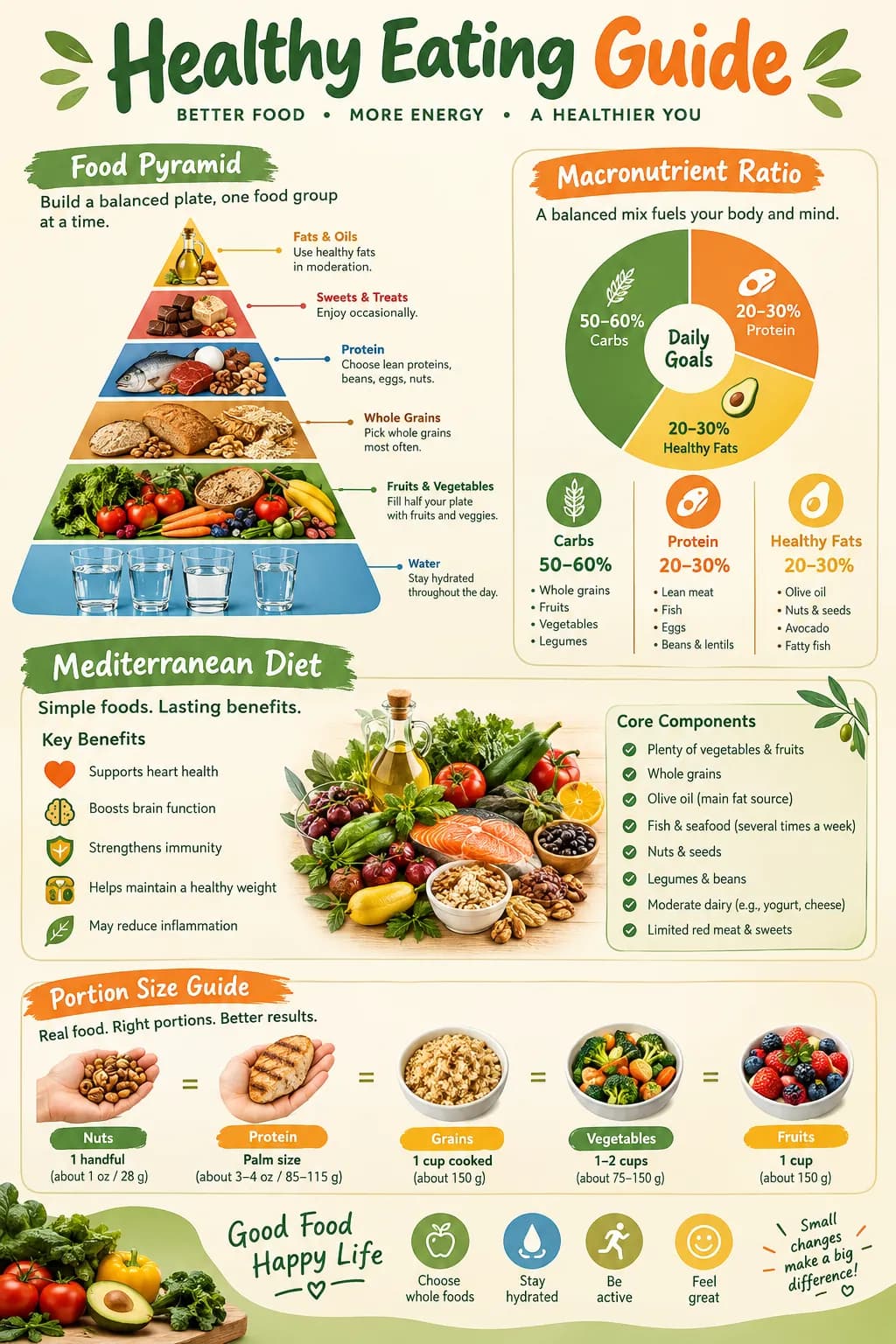
Healthy eating is one of the most impactful lifestyle choices for long-term wellness, disease prevention, and cognitive performance. A balanced diet typically follows macronutrient ratios of approximately 45 to 65 percent carbohydrates, 20 to 35 percent fats, and 10 to 35 percent protein, adjusted for individual activity levels and health goals. The Mediterranean diet, consistently ranked the best overall diet by nutrition experts, emphasizes whole grains, olive oil, fish, legumes, and abundant vegetables
Studies show adherents have a 30 percent lower risk of cardiovascular disease and improved longevity compared to Western dietary patterns. Dietary fiber intake below recommended levels is linked to increased risk of type 2 diabetes, heart disease, and certain cancers across multiple population studies. Portion control remains critical: the average restaurant meal in the United States contains 2 to 3 times the recommended serving size, contributing to overconsumption of 300 to 500 calories per meal
Superfoods like leafy greens, berries, nuts, and fatty fish provide dense concentrations of vitamins, antioxidants, and omega-3 fatty acids linked to reduced inflammation. Meal planning reduces impulsive food choices by up to 40 percent and helps maintain consistent energy levels throughout the day. Hydration, limiting ultra-processed foods, and eating diverse plant-based foods form the foundation of sustainable healthy eating habits.
Macronutrient ranges from major guidelines are starting points, not rigid formulas. Activity level, age, and medical conditions shift whether someone thrives at the lower or upper end of carbohydrate and protein bands. Athletes and highly active workers often need more protein and total calories, while sedentary adults benefit from emphasizing fiber-rich carbohydrates and unsaturated fats rather than refined starches.
The Mediterranean pattern earns top rankings because it is flexible and food-based instead of restrictive. Emphasis on olive oil, fish, legumes, vegetables, and whole grains aligns with roughly 30 percent lower cardiovascular risk in long-term observational and trial data cited by heart associations. It also scales culturally: swaps like beans for some red meat or nuts for processed snacks preserve flavor while improving fat quality.
Ultra-processed foods deserve separate attention from calories alone. In the United States they supply a majority of calories for many adults, displacing vegetables, fruit, and whole grains. CDC data showing only one in ten adults meeting produce targets connects directly to fiber gaps linked in population research to diabetes, heart disease, and some cancers. Adding one serving of plants daily is a low-friction upgrade before overhauling every meal.
Practical habits beat perfectionism. Meal planning cuts impulsive choices by about 40 percent in appetite research, stabilizing energy and reducing oversized restaurant portions that often run two to three times recommended servings. Hydration, limiting sugary drinks, and including fatty fish or plant omega sources support inflammation markers that clinical work associates with 20 to 30 percent improvements when intake is adequate.
Fiber targets near twenty-five to thirty-eight grams daily illustrate how small increments matter. World Cancer Research Fund summaries tie higher fiber to lower colorectal cancer risk per ten-gram increase, which is achievable through beans, oats, berries, and vegetables rather than supplements alone. Sustainable eating is the pattern you can maintain for years, not a short cleanse.
Personal context matters more than any single rule. Age, health conditions, medications, culture, budget, and access to fresh food all shape what a healthy pattern looks like, and people with medical conditions or pregnancy should work with a registered dietitian or physician rather than relying on general guidance. Affordable options such as frozen vegetables, canned beans, whole grains, and seasonal produce make nutritious eating more realistic on a tight budget. Sustainable change usually starts with one or two habits, such as adding a vegetable to the largest meal or swapping sugary drinks for water, and builds gradually instead of demanding a complete overhaul.
Frequently Asked Questions
What is a balanced diet macronutrient ratio?
Which diet is considered the healthiest overall?
How can I start eating healthier without a strict diet?
Are superfoods necessary for a healthy diet?
Sources
- Centers for Disease Control and Prevention (CDC), 2024
- American Heart Association Dietary Guidelines, 2024
- World Health Organization (WHO) Nutrition Report, 2024
- U.S. Department of Agriculture Dietary Guidelines, 2025
Source links go to each publisher's official website.
Embed This Infographic
Copy the code below to share this infographic on your website
<a href="https://www.makeinfographics.ai/infographic/healthy-eating-habits" target="_blank" rel="noopener">
  <img src="https://pic-cdn.chibistyle.app/infographics/infographics/healthy-eating.webp"
       alt="Healthy Eating Habits — Science-backed nutrition guide: macronutrient balance, portion sizes, Mediterranean diet benefits, a"
       width="960" height="1440" loading="lazy"
       style="max-width:100%;height:auto;" />
</a>
<p>Source: <a href="https://www.makeinfographics.ai">MakeInfographics.ai</a> — Free AI Infographic Generator</p>
Create Your Own Healthy Eating Habits Infographic
Customize this topic with your own data, style, and branding
Create Custom Version — FreeMake Something for Your Own Life
Free printable planners, blank or filled in by AI from your details.

Related Infographics
All Healthcare infographics →Global Diabetes Statistics 2026: Prevalence, Costs & Regions
About 589 million adults had diabetes in 2024 per the IDF Diabetes Atlas 11th edition—see global prevalence, undiagnosed share, spending, and prevention.
Sleep Cycle Stages & Sleep Health: What Happens at Night
Sleep cycle stages explained: N1, N2, deep N3, and REM, plus recommended sleep hours by age and a checklist for better sleep health.
Global Youth Mental Health Crisis 2026
Youth mental health in 2026: 250M affected globally, 42% of U.S. teens report persistent sadness, and heavy social media tied to higher depression risk.
Global Nursing Shortage Crisis Timeline 2026
WHO projects 5.9M fewer nurses by 2030; 62% burnout, 500K exits since 2020, and unsafe staffing linked to 16% higher mortality.